Frozen peas are garden peas picked young, blanched and frozen soon after harvest. Blanching stops the enzymes that would otherwise go on changing the peas after picking, which is why frozen peas keep their sweetness.
The portion on Dr Unwin’s charts is 80g, about half a cup, which is also the weight the NHS uses for one portion of vegetables. The common foods chart and the fruits vs vegetables chart both list frozen peas, boiled, at a glycaemic index of 51, in the low band.
Table 1 of the 2016 paper gives the full working for the same portion: 7g of available carbohydrate and a printed glycaemic load of 4. Multiplied out without rounding, 7g at GI 51 is a load of 3.57. The unrounded load is the one that reproduces the published teaspoon figure; the rounded load of 4 would give a slightly higher result. This is why the working on these pages starts from carbohydrate and GI wherever the source prints both.
Peas are legumes, and like other legumes they contain protein and fibre along with their starch and sugars.
Mushy peas, made from dried marrowfat peas soaked and cooked down, and pea soups are different foods. Tinned garden peas are closer to frozen, but in the UK they are often canned with added sugar and salt.
On the fruits vs vegetables chart, frozen peas sit between sweet corn and cabbage.
The numbers
- Glycaemic index
- 51
- Available carbohydrate
- 7g
- Glycaemic load
- 4, as printed on the source
- Teaspoons
- 1.3
Glycaemic load: 7g carbohydrate × GI 51 ÷ 100 = 3.57, printed as 4
Teaspoons: 3.57 ÷ 2.73 = 1.3
Source
Read from a published chart: Common foods (sugar infographic). Dr David Unwin. Public Health Collaboration.
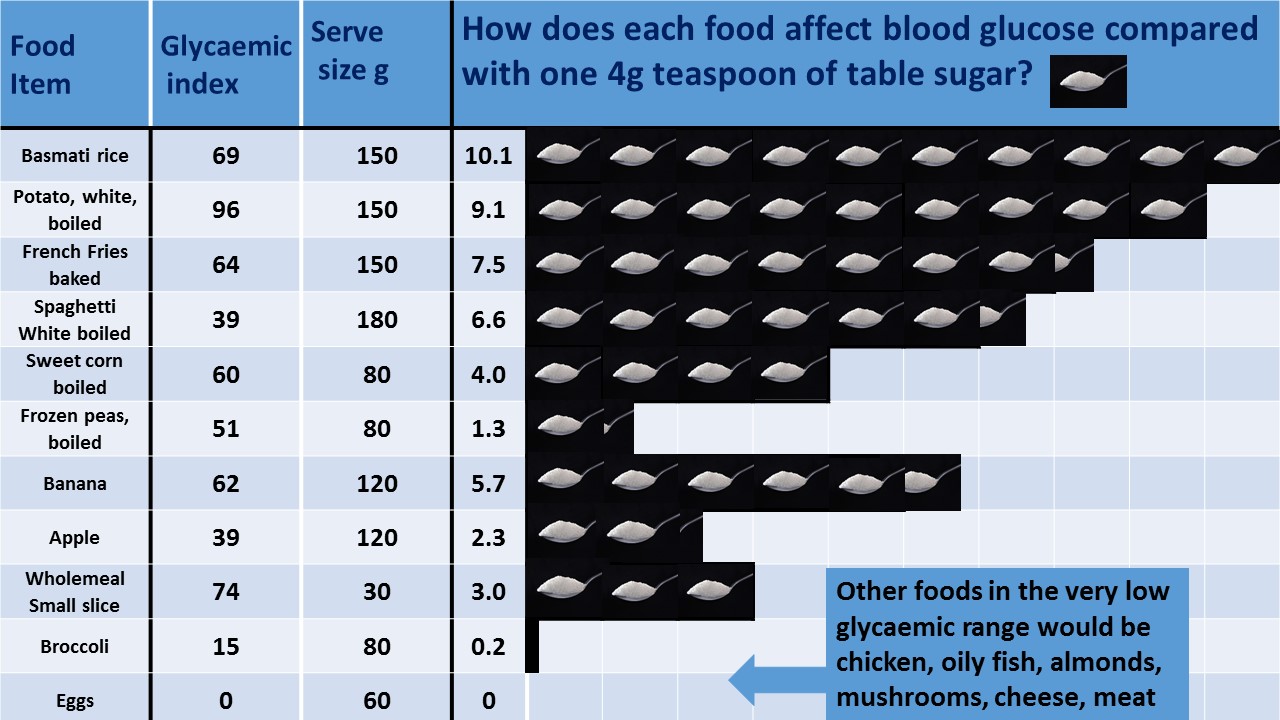
The teaspoon-of-sugar method is the work of Dr David Unwin, and his sugar infographics are published by the Public Health Collaboration at phcuk.org/sugar and used here with PHC's permission. Full provenance for every food is on the sources page.
Side by side
-
Peas, frozen, boiled
about 1/2 cup (80g)
1.3 teaspoons
- White potato, boiled
1 medium (150g)
9.1 teaspoons
- Cornflakes
1 bowl, dry (30g)
8.4 teaspoons