Cornflakes are made by cooking maize grits, flattening them between rollers and toasting them into thin, porous flakes. On Dr Unwin’s breakfast cereals chart they have the highest glycaemic index of the seven cereals, at 93. Pure glucose, the reference, is 100.
The chart’s portion is a 30g dry bowl. It prints a teaspoon figure for that bowl but no glycaemic load, so the load on this page was back-calculated.
Cornflakes also appear in Table 1 of the 2016 paper by Unwin, Haslam and Livesey, which gives the same 30g bowl 25g of available carbohydrate, the same GI of 93, a load of 23 and a teaspoon figure of 8.5. The chart’s 8.4 and the table’s 8.5 are a tenth apart. The chart value is used here and in the calculator, and the difference is listed on the sources page.
Most of the carbohydrate in plain cornflakes is starch from the corn. The “of which sugars” figure on the box reflects the added sugar and malt flavouring, not the starch.
“Cornflakes” is a brand in some markets and a generic name in others, and recipes vary between manufacturers and countries. The GI of 93 comes from the international tables, which average the versions that were tested.
A bowl of cereal is often eaten with milk, and sometimes with toast and juice. Dr Unwin’s chart titled “A healthy breakfast: cereals, toast, fruit juice?” totals a breakfast in exactly that way, using bran flakes rather than cornflakes.
The numbers
- Glycaemic index
- 93
- Available carbohydrate
- not printed on this source
- Glycaemic load
- 22.9, back-calculated from the teaspoon figure
- Teaspoons
- 8.4
Teaspoons printed on the source: 8.4
Glycaemic load: 8.4 × 2.73 = 22.9
Source
Read from a published chart: Breakfast cereals (sugar infographic). Dr David Unwin. Public Health Collaboration.
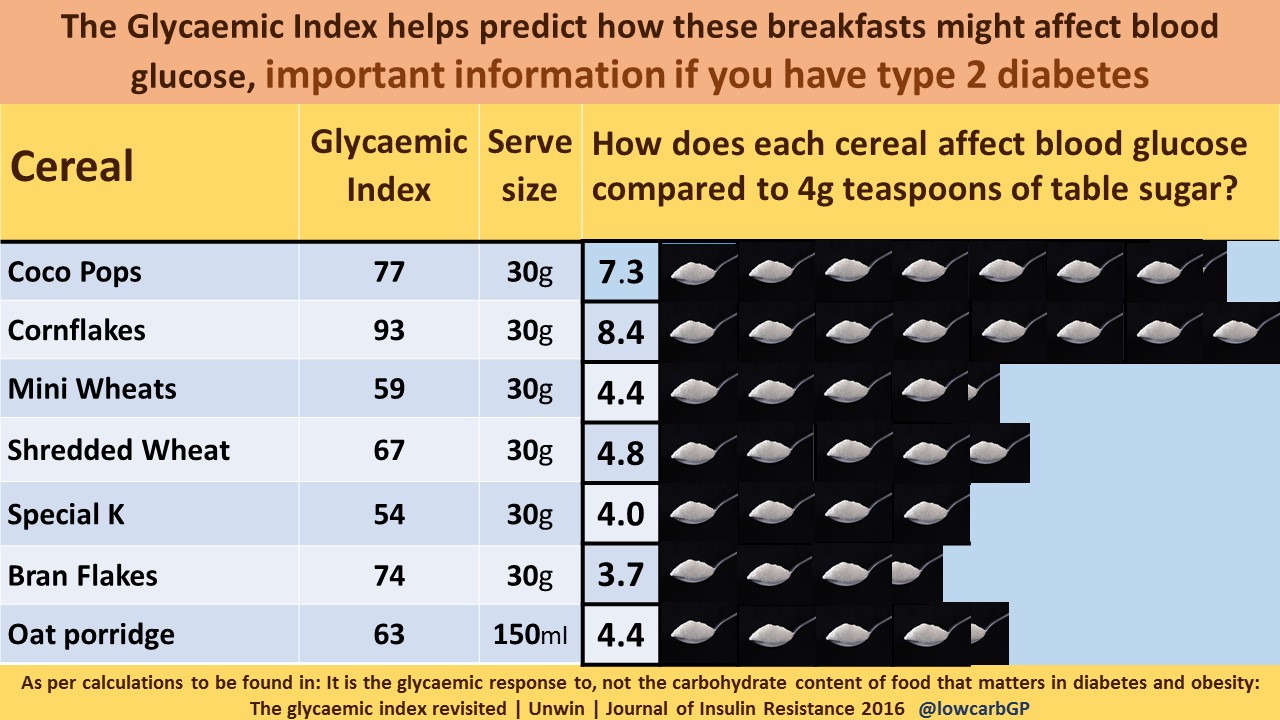
The teaspoon-of-sugar method is the work of Dr David Unwin, and his sugar infographics are published by the Public Health Collaboration at phcuk.org/sugar and used here with PHC's permission. Full provenance for every food is on the sources page.
Side by side
-
Cornflakes
1 bowl, dry (30g)
8.4 teaspoons
- Salmon, cooked
1 fillet (100g)
0.0 teaspoons
- Strawberries
about 8 strawberries (120g)
1.4 teaspoons
- Milk, whole
1 large glass (250ml)
2.0 teaspoons