A nectarine is a smooth-skinned peach. The two belong to the same species, and the difference in skin comes down to a single gene. Dr Unwin’s fruits chart lists fresh nectarines at 120g, about one medium fruit.
The chart gives a glycaemic index of 43, in the low band, and prints a glycaemic load of 4 beside the teaspoon figure.
Stone fruits as a group tend to be listed with low GI values in the published tables. Their sugars are a mix of sucrose, glucose and fructose, and the fruit is mostly water.
Nectarines are seasonal. A nectarine picked firm and ripened in a fruit bowl can differ in sweetness from one left to ripen on the tree, and the chart’s figure is one value for the fresh fruit in general.
Canned nectarines and peaches, often packed in syrup or juice, are a different food from the fresh fruit described here, and they are not on the chart.
Apricots, the other stone fruit on the chart, have a page of their own: fresh apricots.
The numbers
- Glycaemic index
- 43
- Available carbohydrate
- not printed on this source
- Glycaemic load
- 4, as printed on the source
- Teaspoons
- 1.5
Glycaemic load printed on the source: 4
Teaspoons: 4 ÷ 2.73 = 1.5
Source
Read from a published chart: Fruits (sugar infographic). Dr David Unwin. Public Health Collaboration.
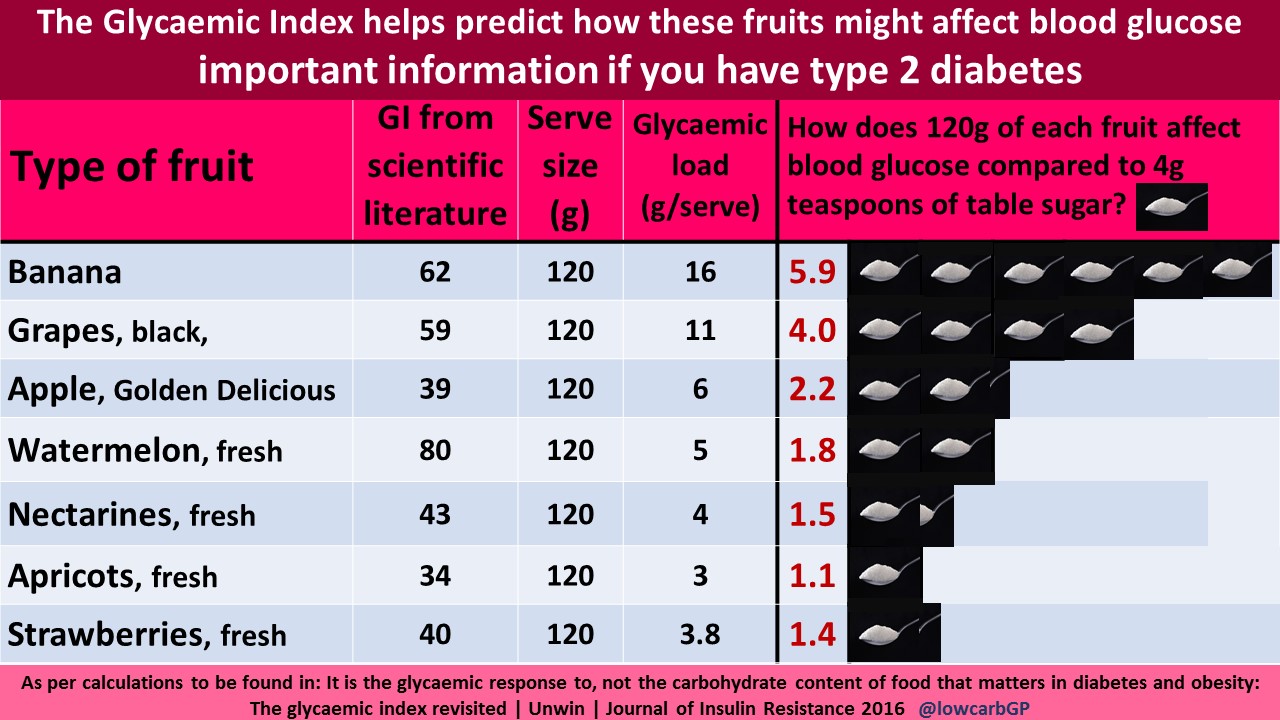
The teaspoon-of-sugar method is the work of Dr David Unwin, and his sugar infographics are published by the Public Health Collaboration at phcuk.org/sugar and used here with PHC's permission. Full provenance for every food is on the sources page.
Side by side
-
Nectarine
1 medium (120g)
1.5 teaspoons
- Coco Pops (chocolate puffed rice)
1 bowl, dry (30g)
7.3 teaspoons
- Mango juice
1 glass (200ml)
5.0 teaspoons