Almond flour fufu is a recent variation on a traditional West African dough. Recipes sold as low-carb or keto fufu typically combine almond flour with a binder such as psyllium husk to reproduce the soft, stretchy texture of fufu without cassava, yam or plantain. The African and Caribbean foods chart does not give the recipe it measured.
The chart prints the teaspoon figure for 100g of this fufu to two decimal places, 1.12, the only figure on the chart given that precisely. This site shows every figure to one decimal place, so it appears here as 1.1, and the glycaemic load was back-calculated from the rounded figure.
Almond flour is ground blanched almonds. It is mostly fat and protein, with some fibre and relatively little starch or sugar. Almonds also appear in the chart’s side panel of foods in the very low glycaemic range, beside garden egg and jute leaf, mongongo nuts, olive oil, shea butter, coconut oil, wagasi and cauliflower, though no figure is printed for almonds on their own.
No glycaemic index or carbohydrate weight is given on the chart, and none is shown here.
The binders used in these recipes change the result. Psyllium is almost entirely fibre, while recipes that use a little cassava or plantain flour for texture add starch.
The chart pairs this row with fufu made with cassava flour at the same 100g serving.
The numbers
- Glycaemic index
- not printed on this source
- Available carbohydrate
- not printed on this source
- Glycaemic load
- 3, back-calculated from the teaspoon figure
- Teaspoons
- 1.1
Teaspoons printed on the source: 1.1
Glycaemic load: 1.1 × 2.73 = 3
Source
Read from a published chart: African and Caribbean foods (sugar infographic). Dr David Unwin and Dr Geoffrey Livesey. Public Health Collaboration.
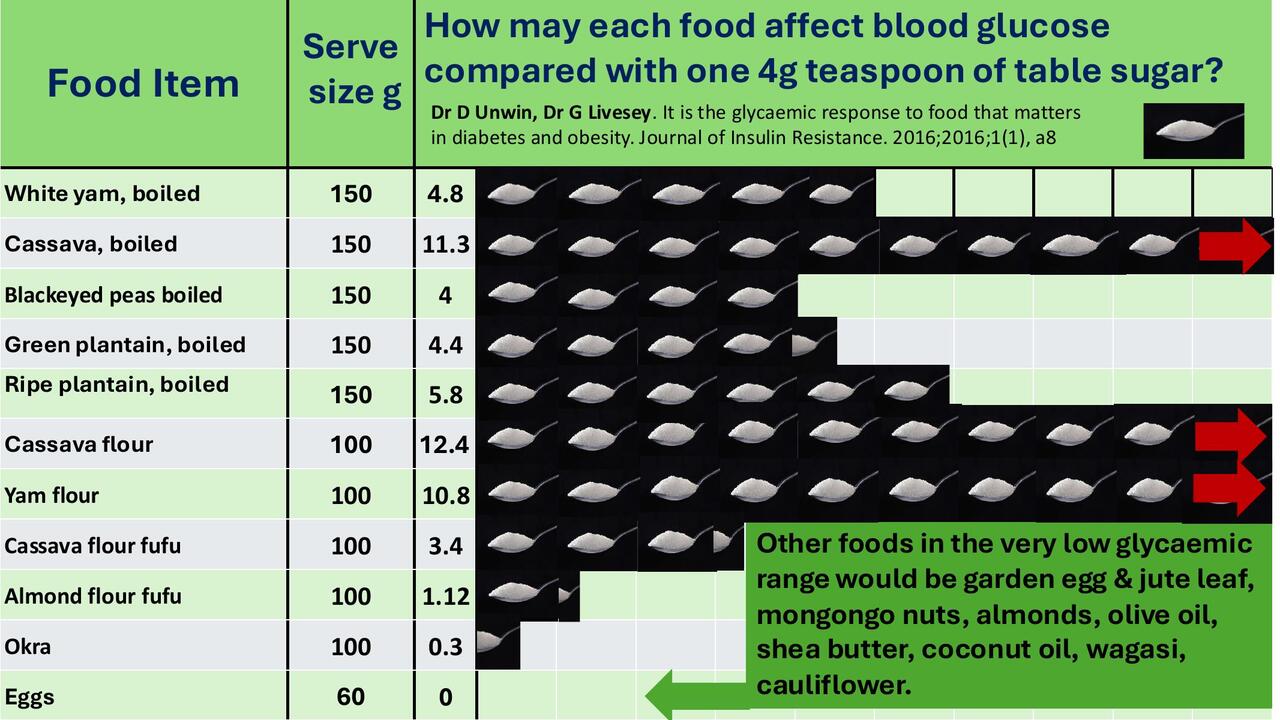
The teaspoon-of-sugar method is the work of Dr David Unwin, and his sugar infographics are published by the Public Health Collaboration at phcuk.org/sugar and used here with PHC's permission. Full provenance for every food is on the sources page.
Side by side
-
Fufu made with almond flour
1 serving (100g)
1.1 teaspoons
- Fufu made with cassava flour
1 serving (100g)
3.4 teaspoons
- White bread
1 small slice (30g)
3.7 teaspoons