Pita is the one flatbread on Dr Unwin’s bread chart. The chart keeps the 30g weight it uses for every sliced loaf, so the portion here is part of a pita rather than a whole one: about half of a small pocket. Large pitas sold for wraps and kebabs weigh much more, and the figure rises with the weight.
The chart lists the pita as wholemeal and gives it a glycaemic index of 56, the lowest of its seven breads and at the lower edge of the band conventionally labelled medium. Its glycaemic load, 8, is printed alongside the teaspoon figure.
Pita is a leavened bread baked very hot and fast, which puffs the dough and opens the pocket. Otherwise its recipe is close to an ordinary wheat loaf: flour, water, yeast and salt. Flatbreads are sometimes assumed to be lighter in carbohydrate than sliced bread. The chart sets them side by side at equal weight, which removes the difference in shape from the comparison.
A wholemeal pita from another bakery may use a blend of wholemeal and white flour. The ingredients list on a packet names the flours in order of weight, so the first flour listed is the one the bread contains most of.
In the calculator, portions add together, so two halves of a pita count as two portions. The other flatbreads in the dataset, wheat roti and almond-flour roti, come from the South Asian foods chart and have their own portion weights.
The numbers
- Glycaemic index
- 56
- Available carbohydrate
- not printed on this source
- Glycaemic load
- 8, as printed on the source
- Teaspoons
- 2.9
Glycaemic load printed on the source: 8
Teaspoons: 8 ÷ 2.73 = 2.9
Source
Read from a published chart: Bread (sugar infographic). Dr David Unwin. Public Health Collaboration.
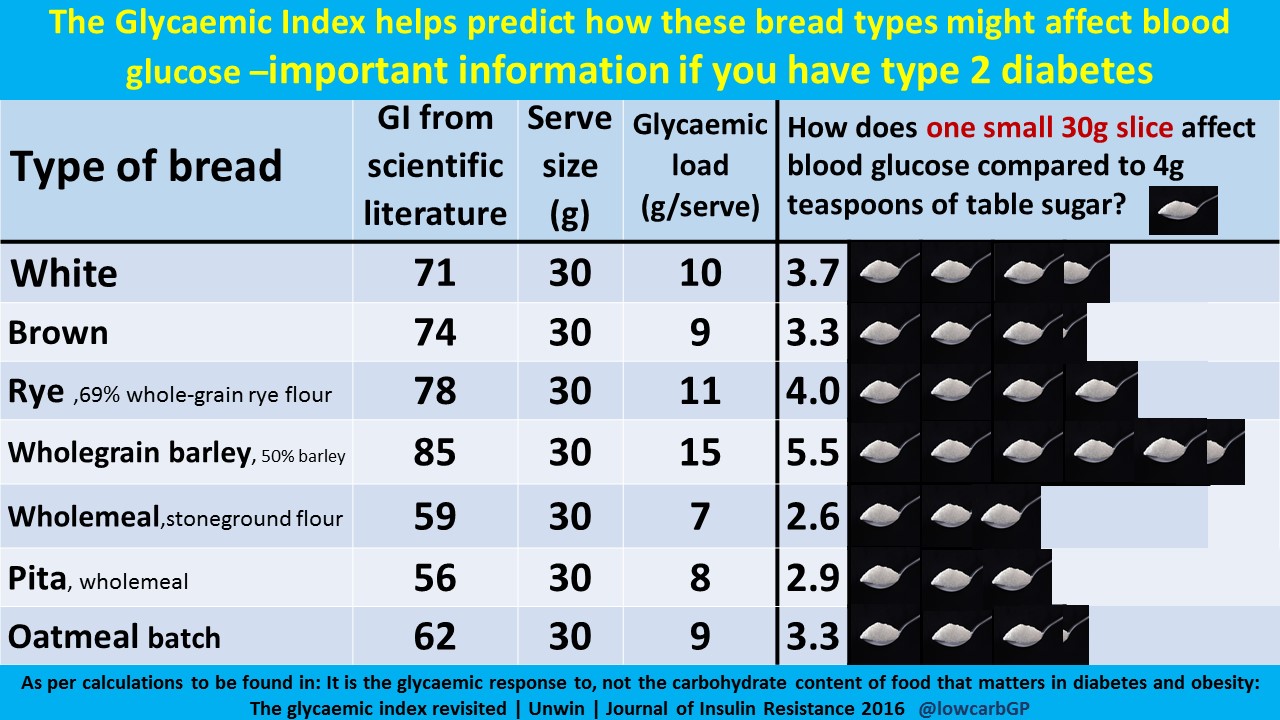
The teaspoon-of-sugar method is the work of Dr David Unwin, and his sugar infographics are published by the Public Health Collaboration at phcuk.org/sugar and used here with PHC's permission. Full provenance for every food is on the sources page.
Side by side
-
Wholemeal pita
30g portion (about half a small pita)
2.9 teaspoons
- Greek-style yogurt
1 pot (200g)
0.4 teaspoons
- Chickpeas, cooked
about 2/3 cup (100g)
1.9 teaspoons
- Malt loaf
100g
14.7 teaspoons